Mortal Mint
Public Trust Clearance - I2 - I4 - Airforce
Product Design, UX Research, UX Design, UI Design
Roles: UX Engineer Lead
Date / Time: March 2025 – September 2025
Tools: Figma, Zeplin, Lucid Spark, Lucid Chart, Pivotal, GitLab, Mobbin, Slack, Zoom, Microsoft Teams, Adobe Creative Cloud, Microsoft Office, Microsoft PowerPoint, Google Slides, Google Docs, Obsidian, Open AI
The Challenge
Mortal Mint’s mission was critical: help analysts fight financial crime, money laundering, and terrorism financing by consolidating investigative tools.
But users did not see its value:
They didn’t know what to do with it.
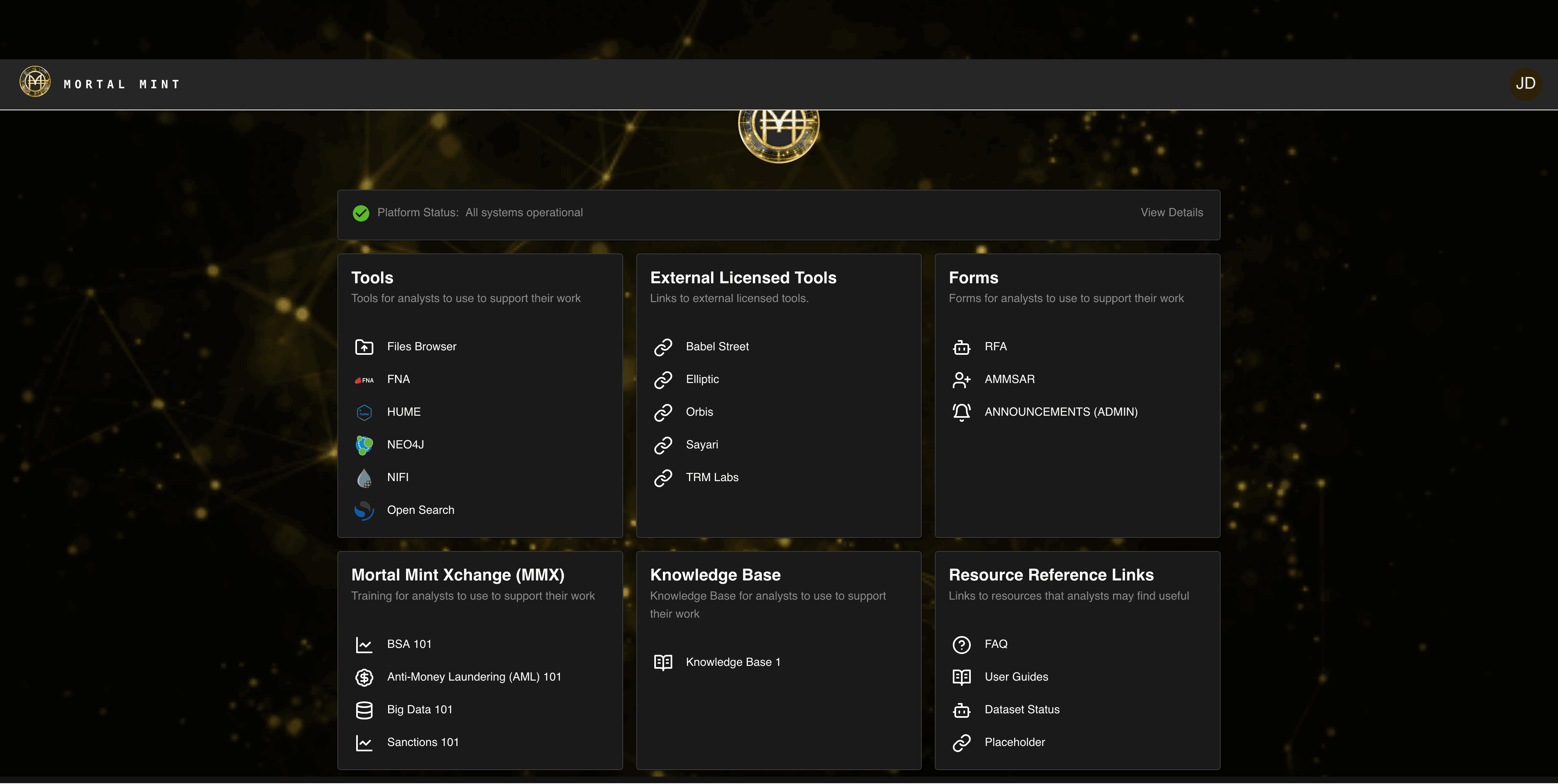
Information was scattered, with no clear hierarchy.
Tools were hard to find, even after training.
Forms were cumbersome, often still tied to static PDFs.

Structurally, Mortal Mint lacked:
UX research (no personas, no validated journeys).
A design system (inconsistent branding, layouts, and standards).
Feedback loops to capture and act on user needs.
The guiding question became:
“How do we make Mortal Mint intuitive, cohesive, and valuable so analysts can focus on tracking crime — not fighting the interface?”
Prioritizing Problems
Facilitated a workshop using an Eisenhower Matrix to prioritize UX tickets.
Built an actionable UX roadmap.
Led Agile ceremonies for the Clarity UX team after Deloitte downsized.
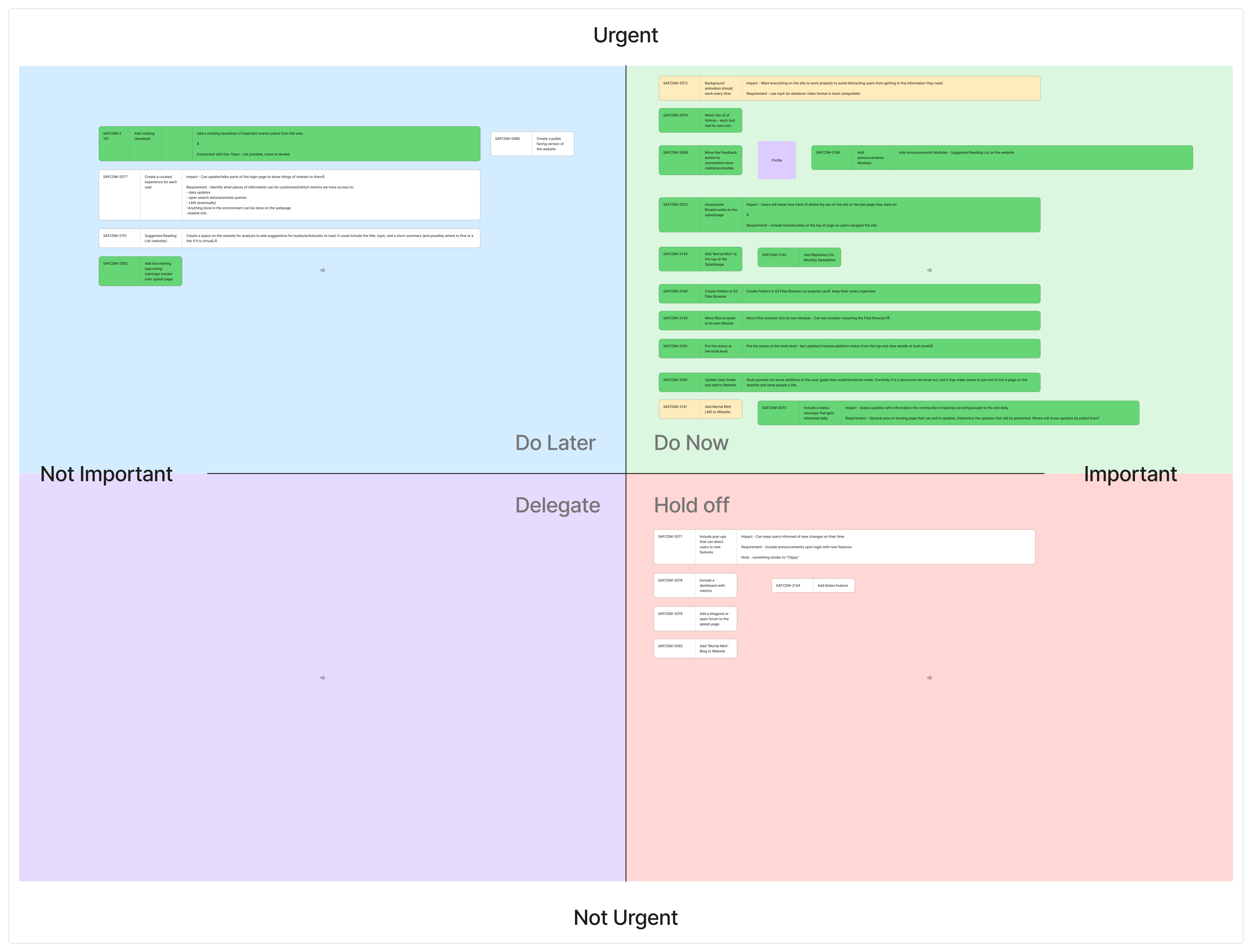
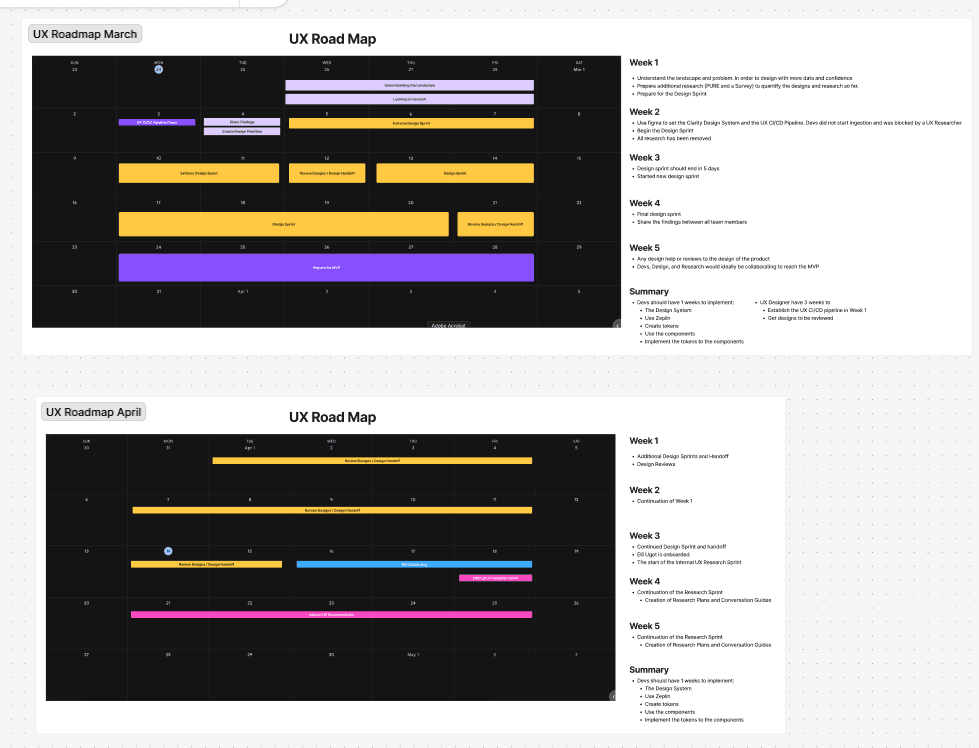
Impact: Introduced clarity and direction where none existed.
Ethnographic Research
Observed how analysts and civilians used Mortal Mint in real contexts.
Example finding: Analysts often needed 3+ tools to complete a single investigation task.

Impact: Grounded design work in real-world investigative workflows.
Information Architecture with OOUX
Applied Object-Oriented UX (OOUX) to map pages, objects, and relationships.
Built a tree chart to restructure navigation and hierarchy.
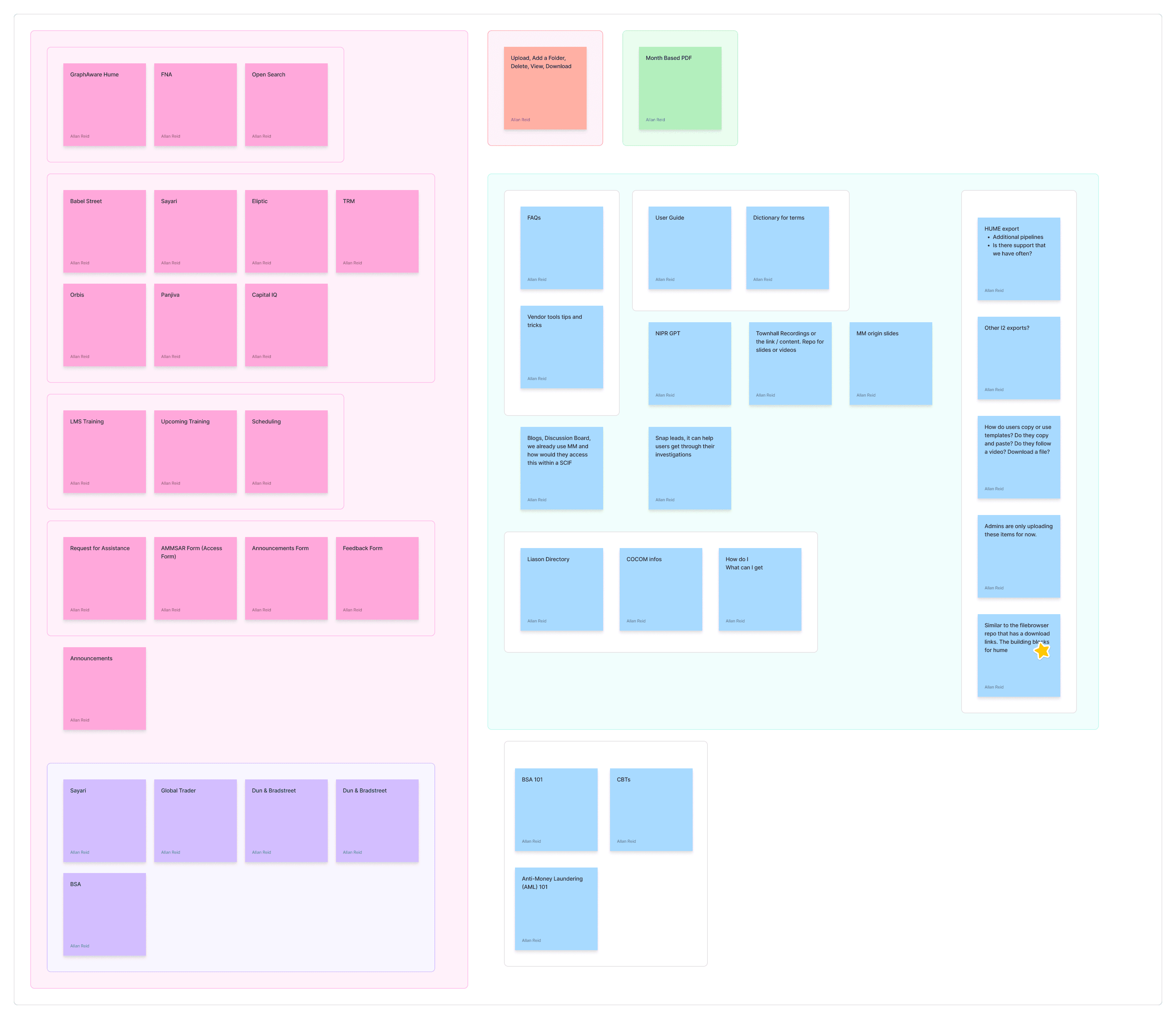
Impact: Turned scattered tools into a coherent ecosystem, improving findability.
Personas & Journeys
Defined 5 core personas (e.g., Legacy Analyst, Civilian Decision Maker, Early Adopter, Disenchanted Users, and Newly Onboarded Users).
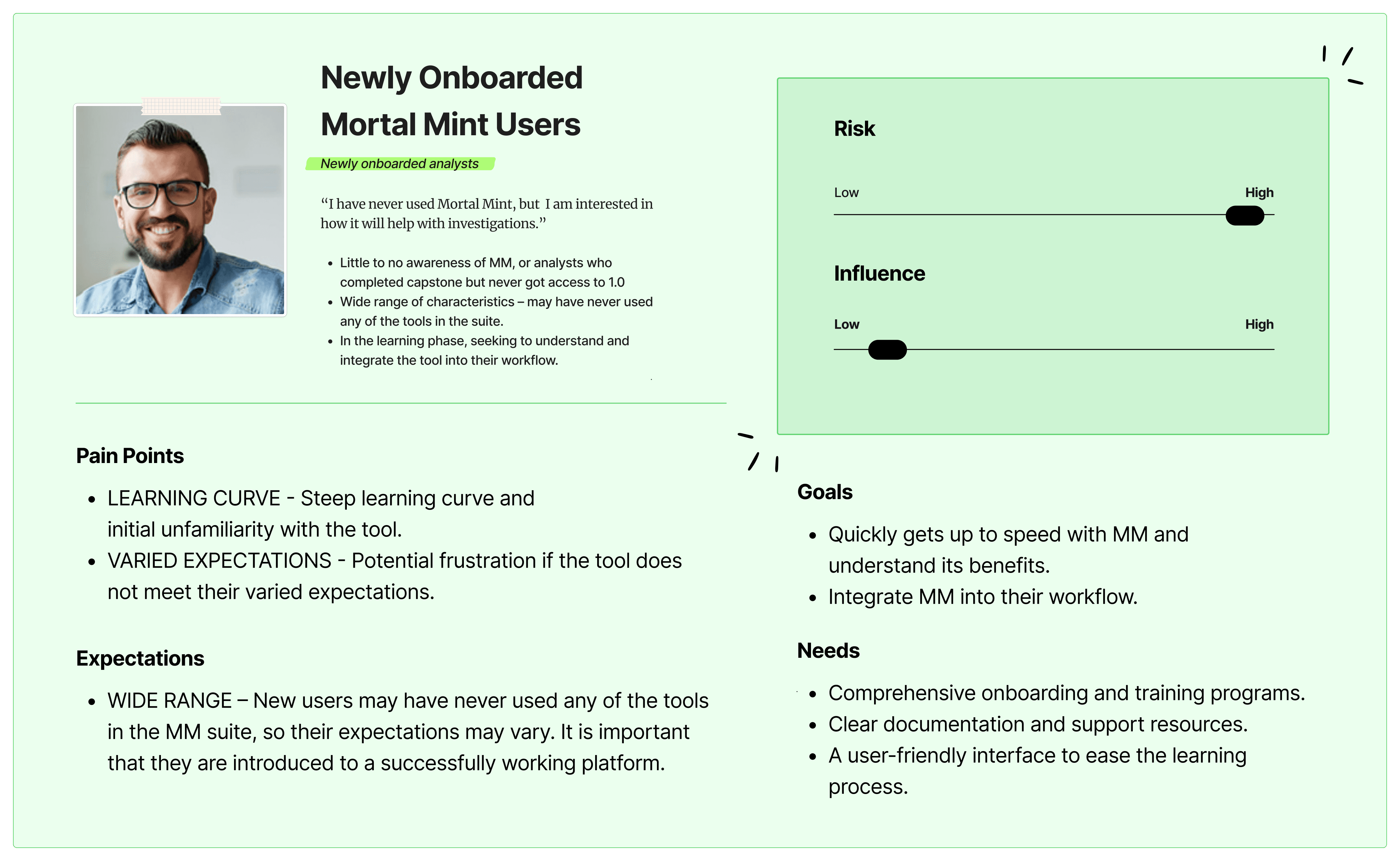
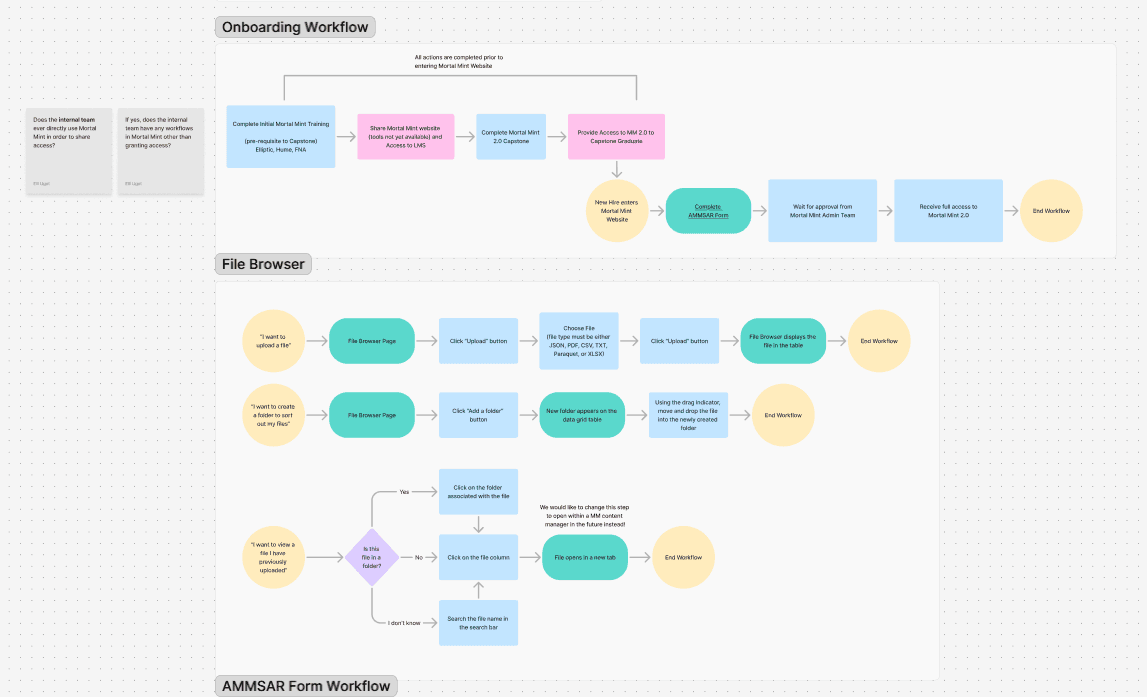
Impact: Aligned designs to real investigative needs.
Prototyping & Design System
Created low-fi prototypes to validate layouts and flows.
Iterated into mid–hi fidelity designs with developers, analysts, and government civilians.
Built the first platform-wide design system in Figma:
Light/dark modes
Modular components
Accessible colors and typography
Hosted in Zeplin, paired with interactive Figma prototypes.

Impact: Replaced ad hoc visuals with consistent, scalable patterns.
Production Delivery
Linked designs into Zeplin for developer handoff.
Converted styles and components into design tokens.
Supported implementation across splash page, dashboards, forms, and file browser.
Accessible colors and typography
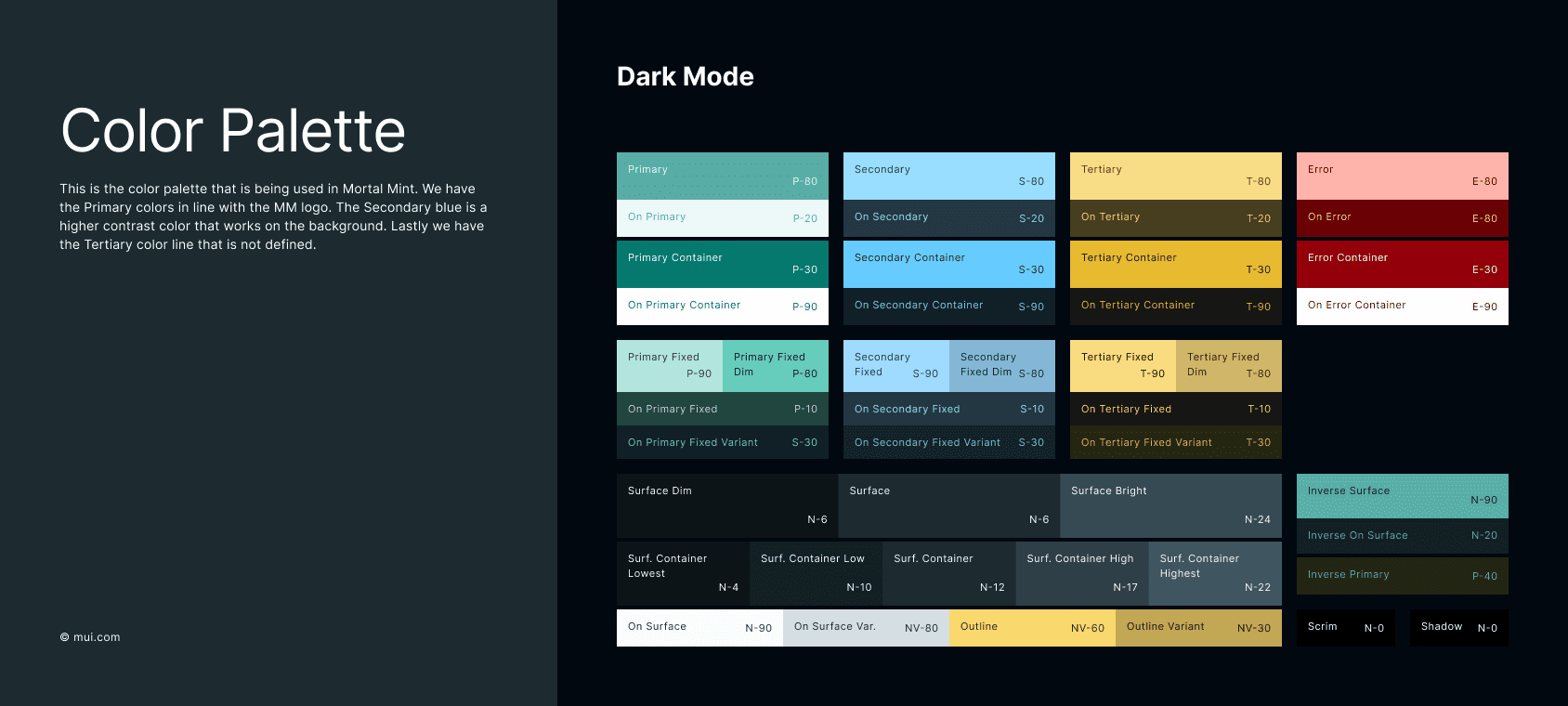

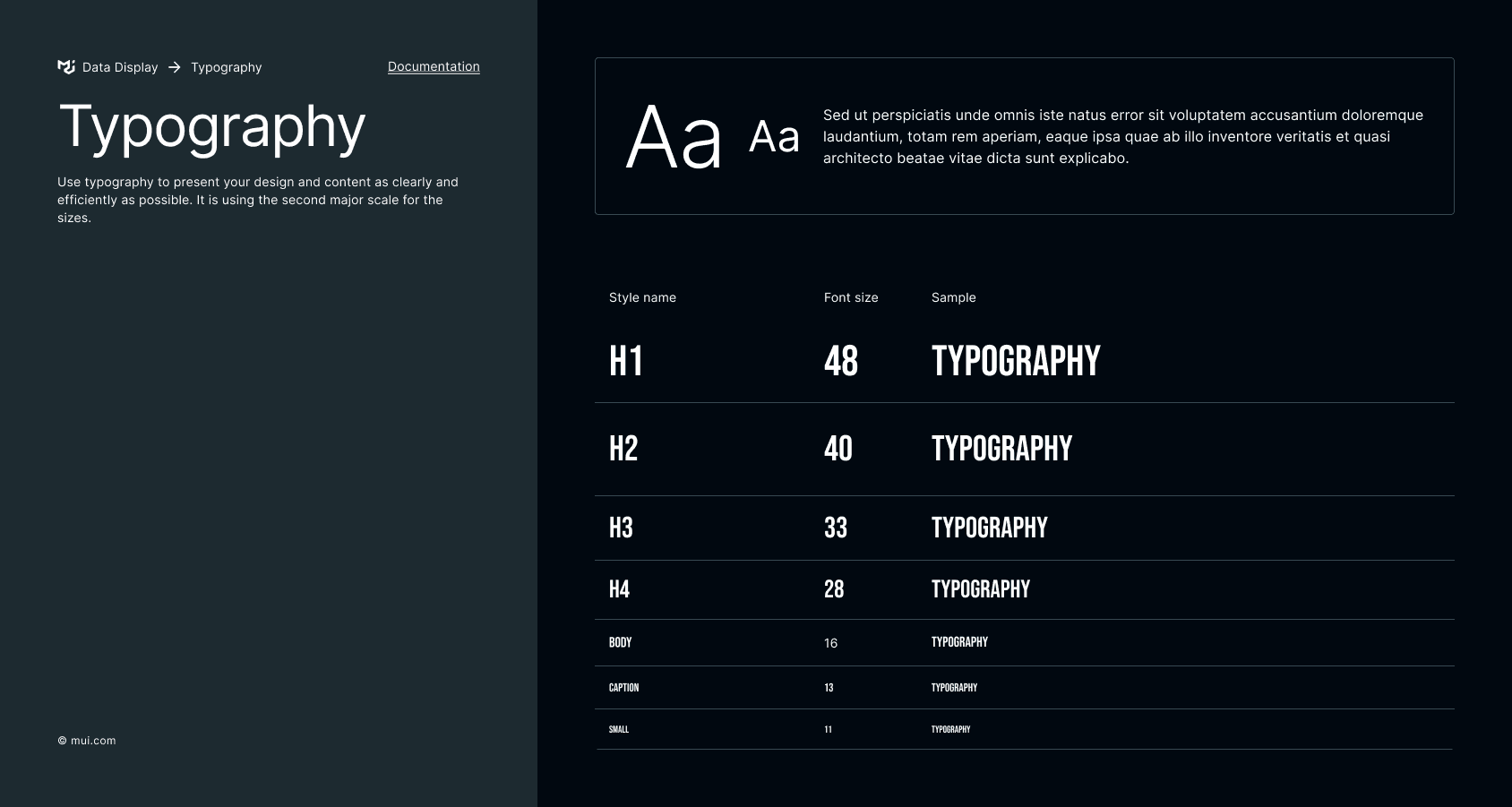

Impact: Enabled Mortal Mint’s first design system to ship live to production.
Redesigned Core Interfaces
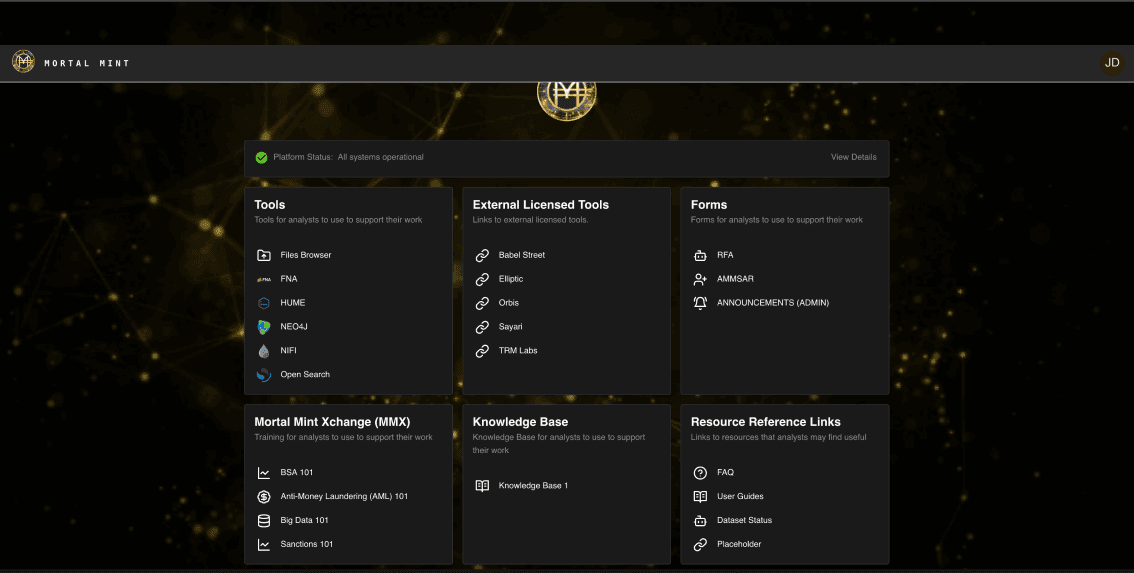
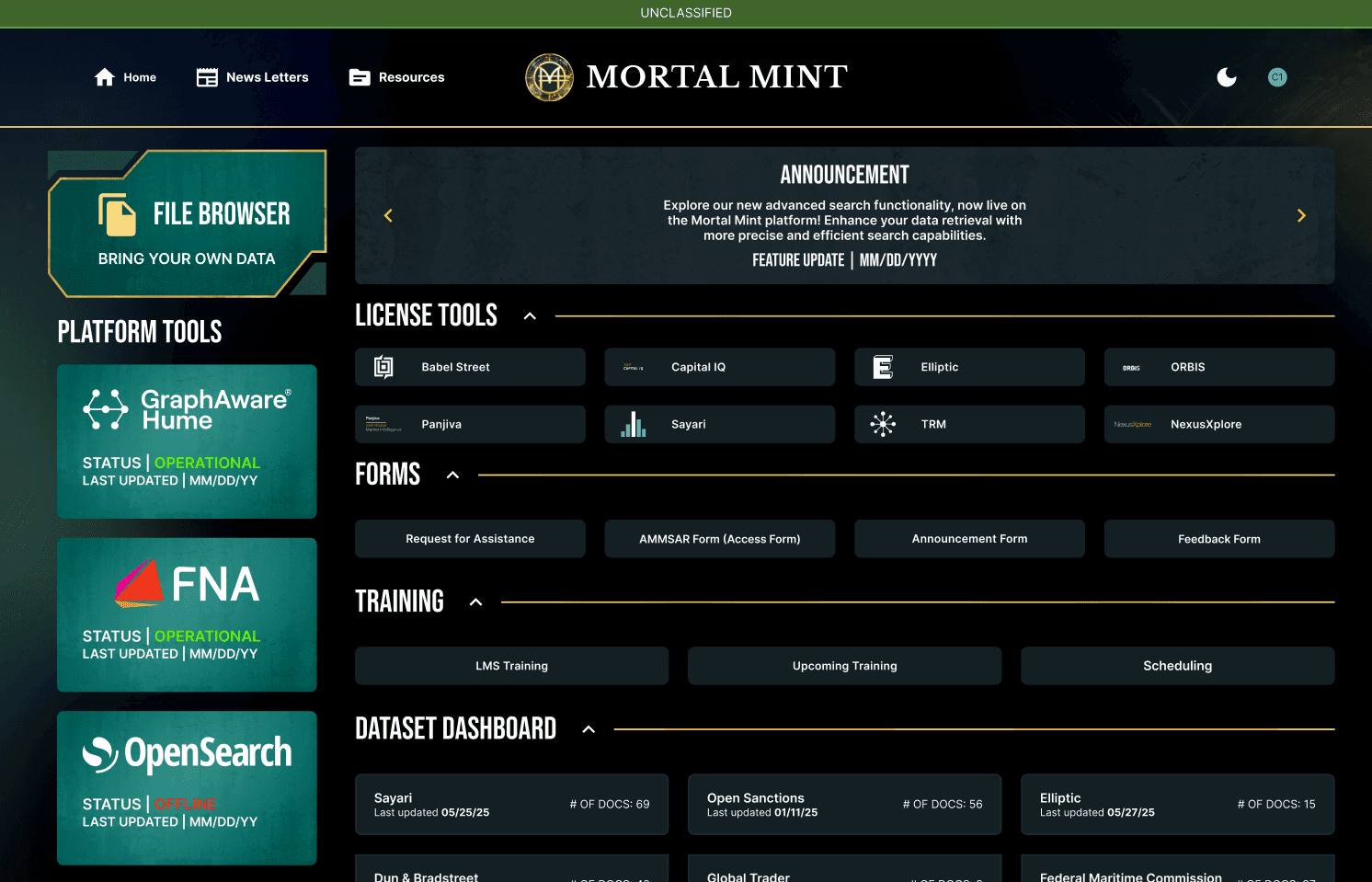
Splash Page
Tile-based layout improved discoverability.
Clear separation of internal vs licensed tools.
Validated with first-click testing.
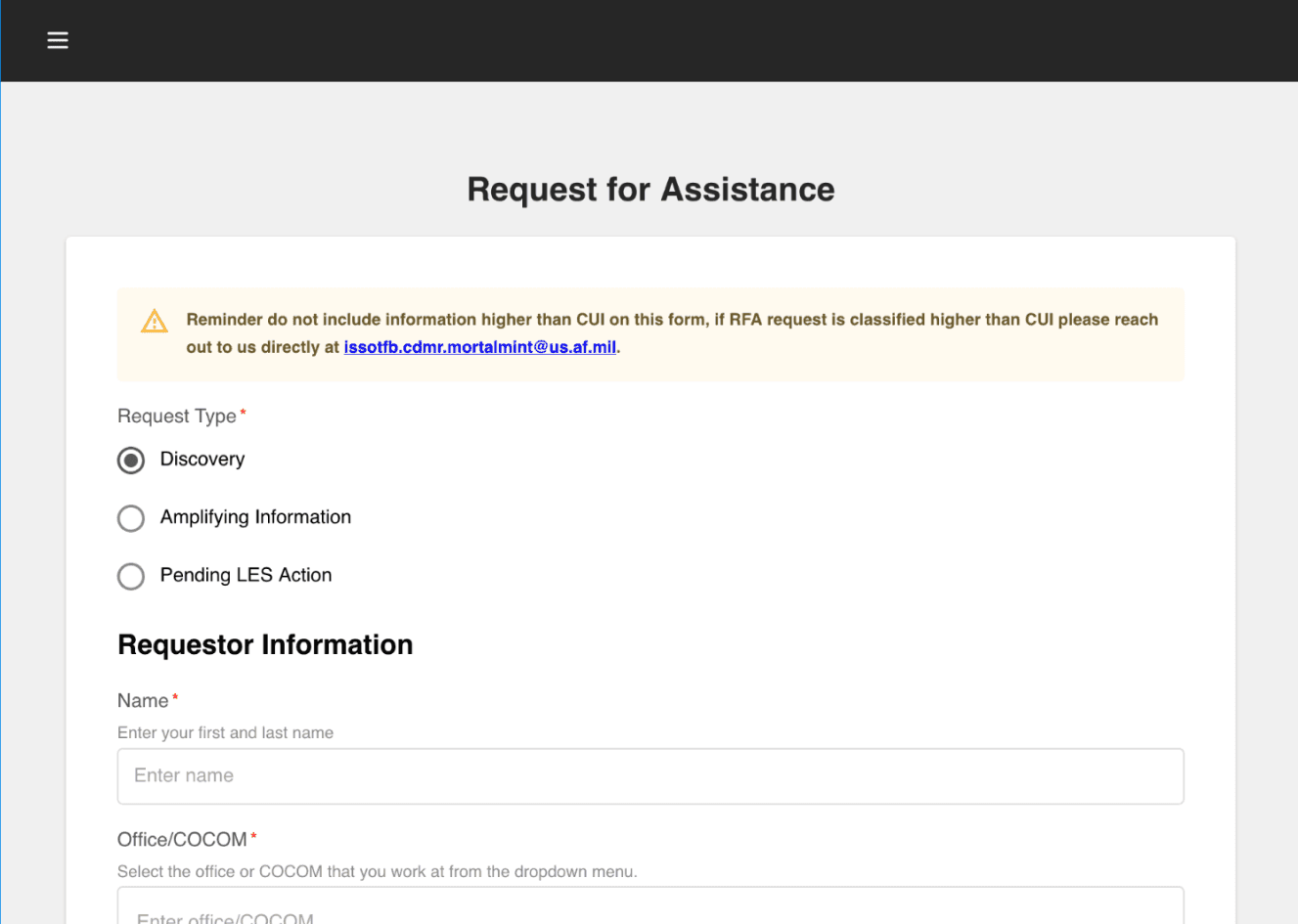
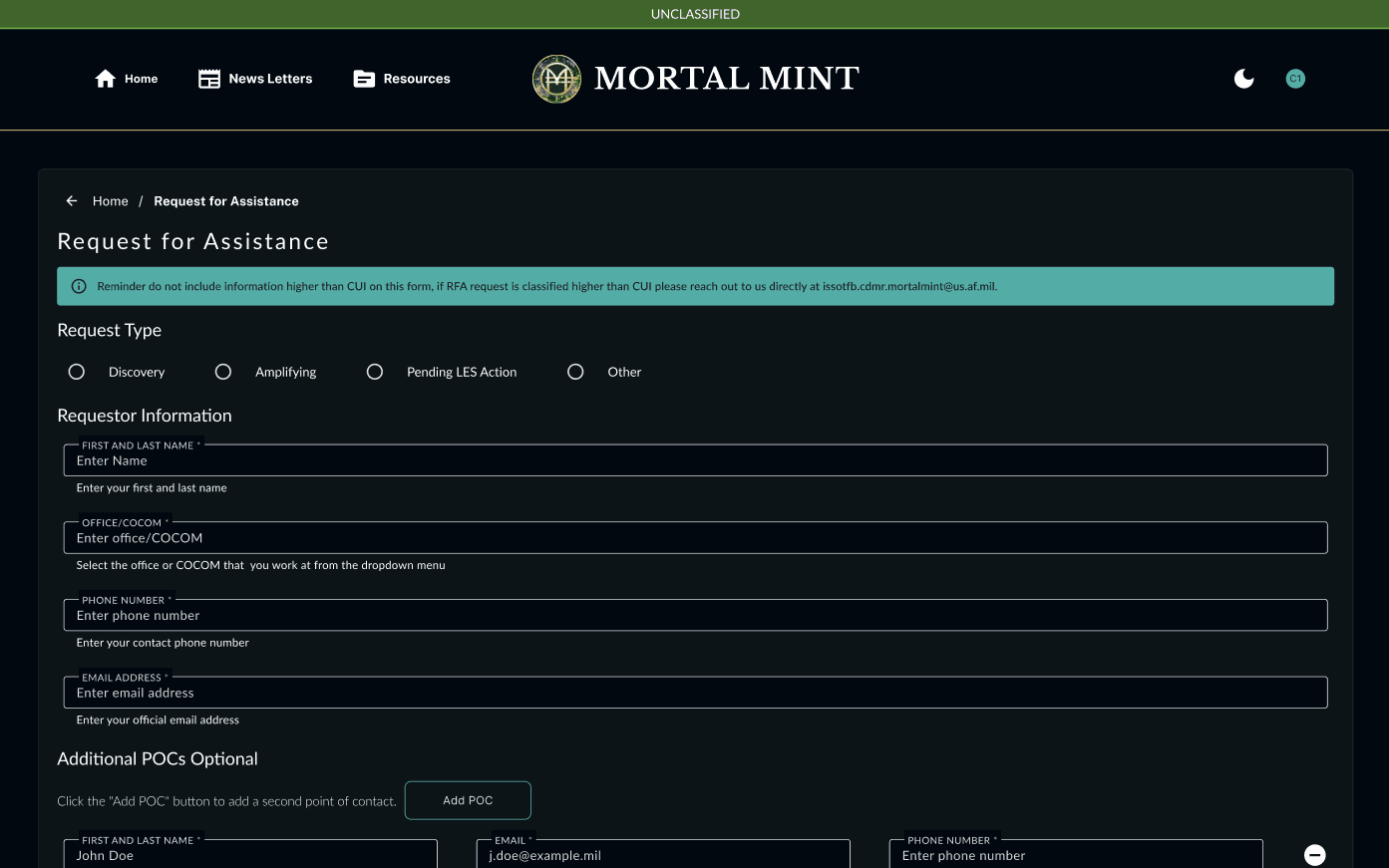
Forms (RFA, AMMSAR)
Replaced PDFs with dynamic online forms.
Added tooltips, dropdowns, and autofill suggestions.
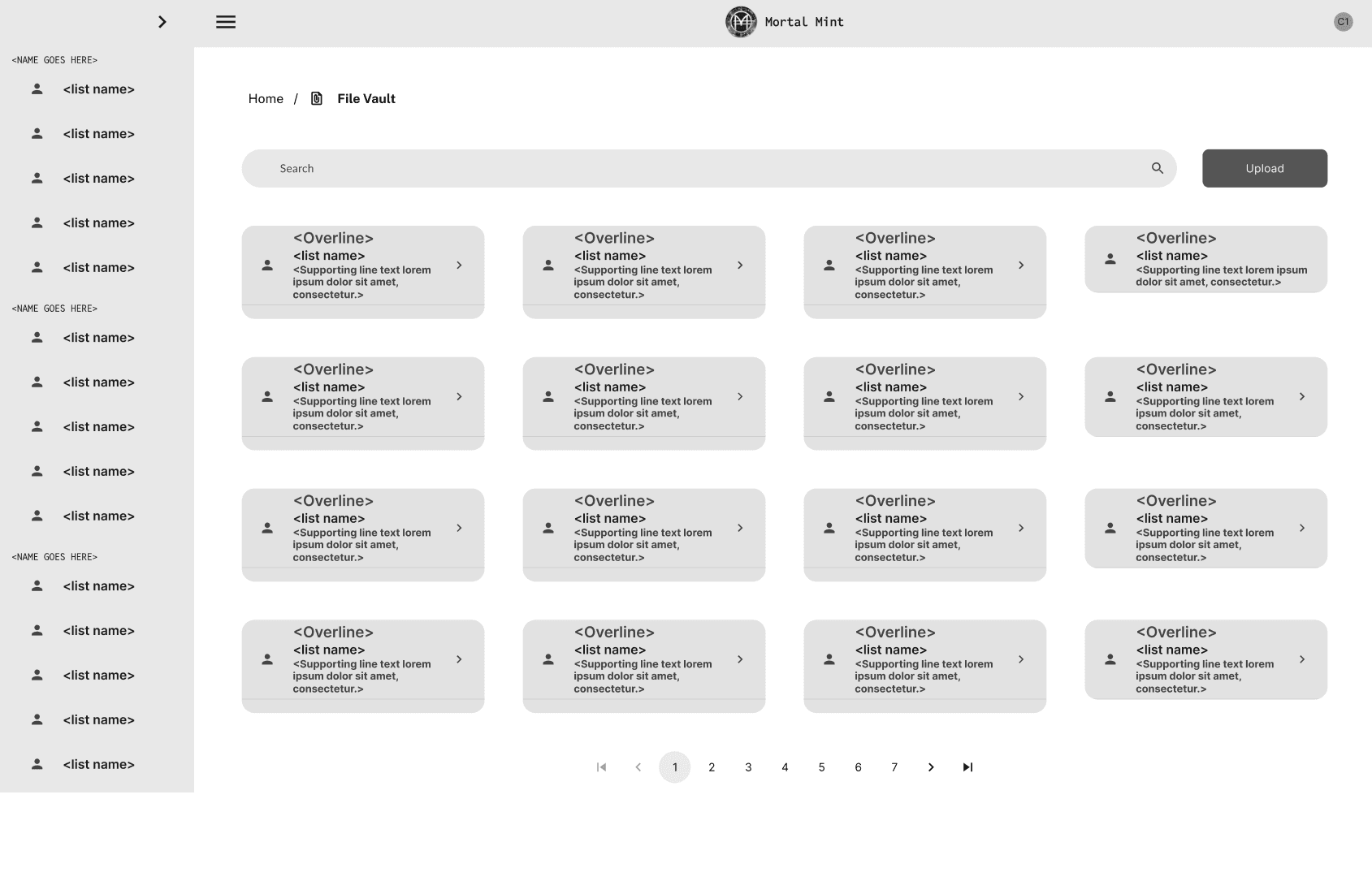
File Browser
Migrated to scalable folder-based structure.
Optimized for heavy analyst workflows.
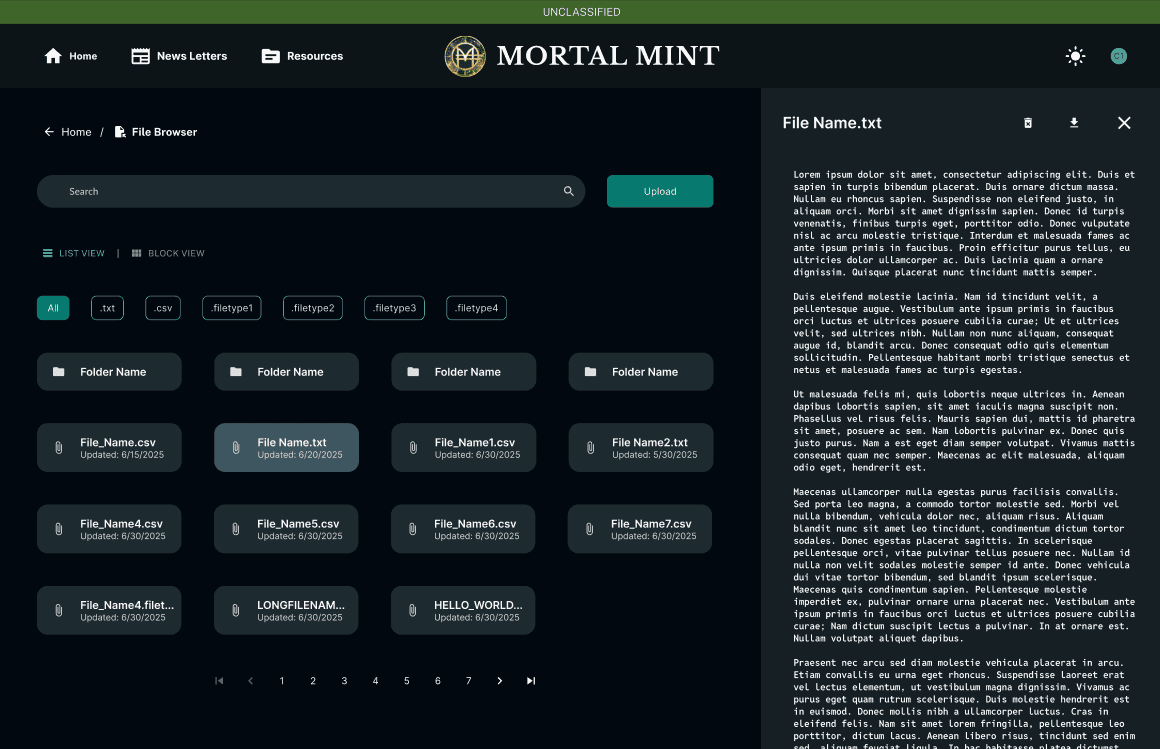
Impact: Streamlined high-friction workflows tied directly to investigative tasks.
Usability Testing
Conducted usability sessions with representative users.
Splash feedback: “Clean design. I can find everything.”
Form feedback: “So much better than PDFs.”
Impact: Validated that the redesign solved navigation and workflow frustrations.
Branding & Accessibility
Delivered light and dark modes.
Met AA accessibility standards.

Impact: Gave Mortal Mint a professional, inclusive identity.
Follow-Up Survey
Reduced questionnaire from 100 → 60 questions.
“No value” ratings dropped from 46% → 10%.
Overall perceived value increased by 30%.
Impact: Quantified the turnaround in just 5 months of UX support.
Strategic Shift Enabled as the lead UX Engineer
Outcome
Mission support: Analysts can now track suspicious accounts and blockchain activity without wasting time searching.
Confusion solved: OOUX clarified structure and navigation.
Findability fixed: Tools and forms became easy to locate.
Consistency achieved: First design system standardized visuals and flows.
Delivery enabled: Figma → Zeplin → tokens pipeline brought designs to production.
Accessibility delivered: Light/dark modes met AA standards.
Survey results improved: 30% increase in perceived value in just 5 months.
Reflection
Mortal Mint had over a year of stagnation without UX support. Despite its mission to track financial crime and money laundering, users found the platform scattered, confusing, and of little value.
When I joined in March 2025, I had less than half a year to help turn this around. By establishing research, restructuring navigation, building a design system, and shipping live through a design-to-dev pipeline, we transformed Mortal Mint into a cohesive, accessible, and mission-ready ecosystem.
The result was clear: a 30% increase in perceived value in just 5 months — a dramatic shift that showed the real power of embedding UX in a high-stakes investigative platform.